How to measure your social media SEO in Search Console
On this page
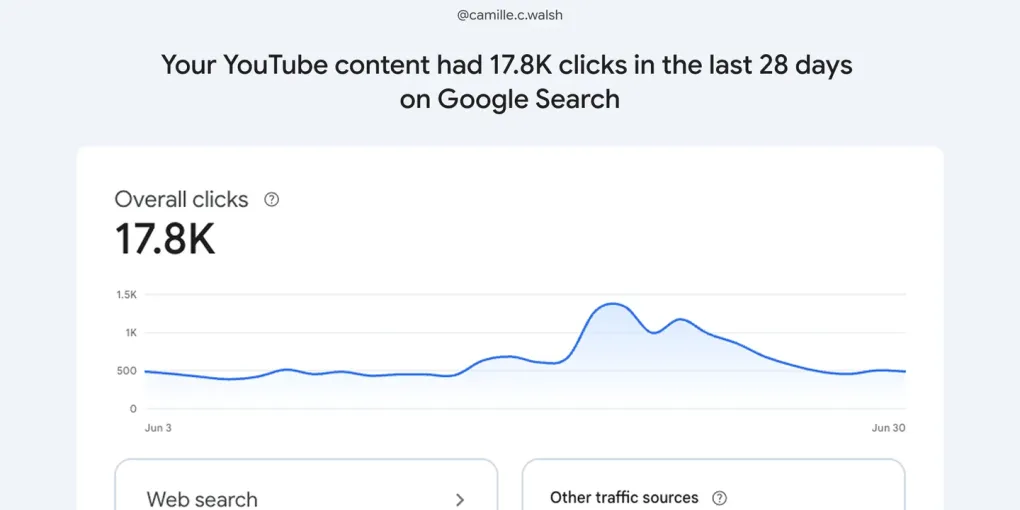
Google just released one of the coolest GSC updates I can remember. Search Console added a new property type called Platform Properties, and it shows how your content on YouTube, TikTok, Instagram and X performs in Google Search and Discover.
I think this is kind of a big deal, for both SEO and GEO.
Social media has been eating into search for years. A lot of people, younger audiences especially, use e.g. TikTok as a search engine now. But measuring your social media SEO was always tricky. Now it got much easier, at least for Google search.
Quick definition first, because the term gets thrown around a lot. Social media SEO is getting your social content to show up in search, both inside the platforms and in Google.
What Google actually released
Platform Properties is a new property type in Search Console. You connect a platform, and Google starts reporting how that platform’s content does in Search and Discover: clicks and impressions, the queries you show up for and roughly how you rank. It currently covers YouTube, TikTok, Instagram and X. (MAN I wish they did LinkedIn too…)
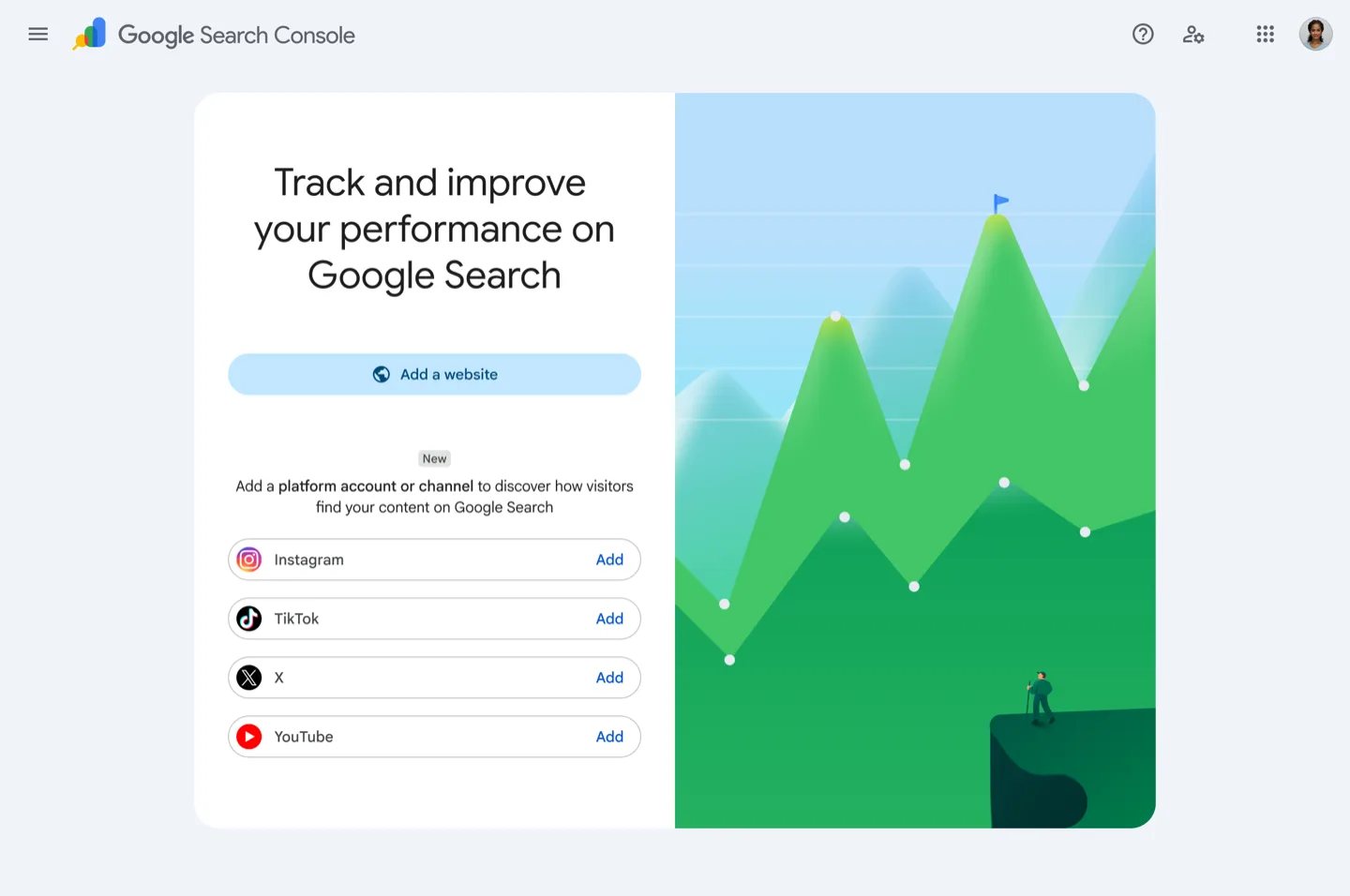
It’s rolling out gradually, so if you don’t have it yet, you will soon. (as of 11.7.2026)
What it looks like on each platform
The four platforms aren’t equal here, so it helps to know what to watch on each.
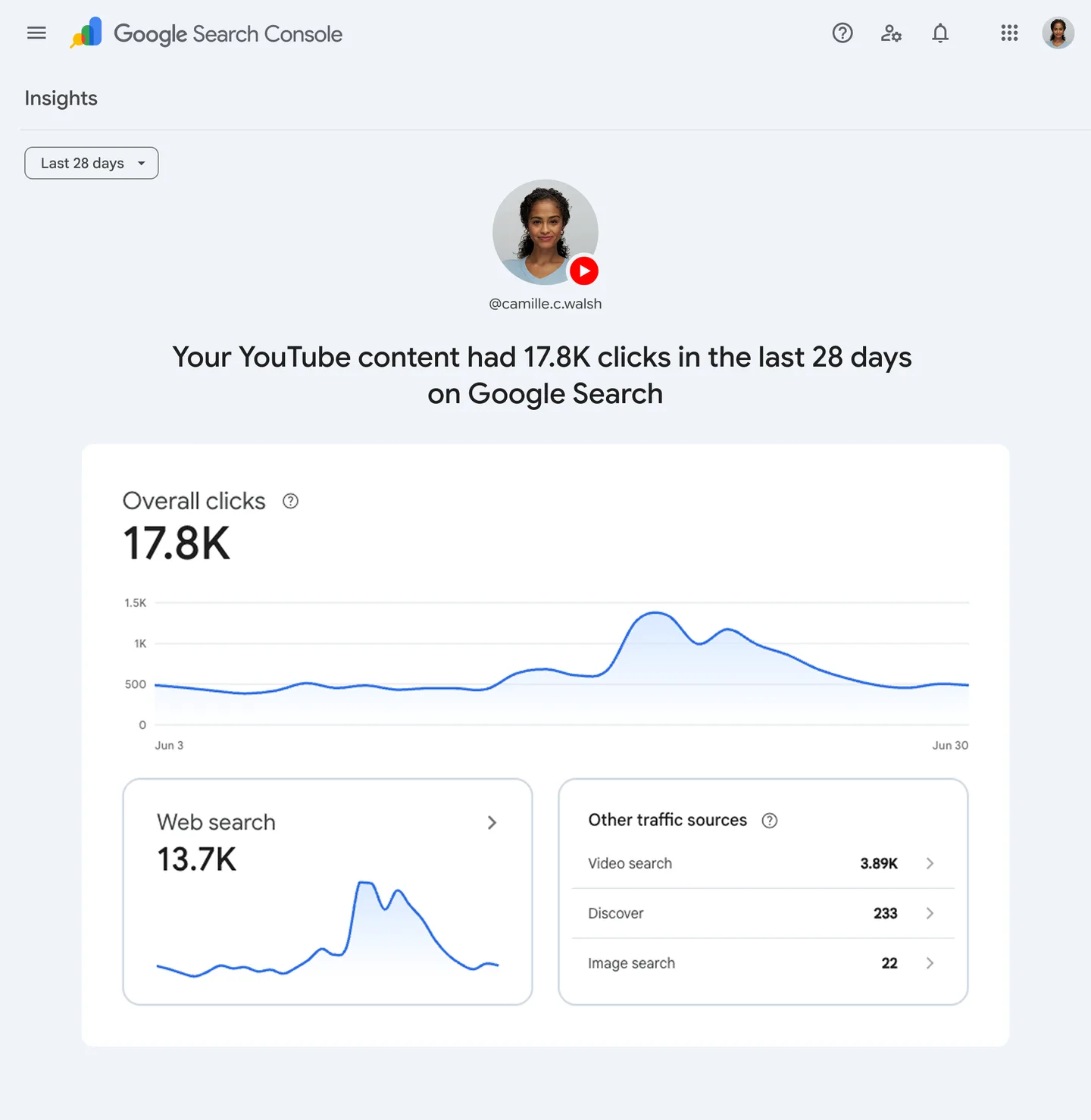
YouTube. YouTube SEO is the one that matters most (in my opinion), because YouTube already ranks in Google constantly and is the 2nd most used search engine after Google Search. Watch which of your videos pull search impressions week after week. Those are the ones doing real work, and they’re worth building the titles and chapters around.
Instagram. SEO for Instagram used to be a black box in Google. Now you can see whether your posts and profile show up, and for what. Start with branded searches, then watch for the topic searches your posts start ranking for.
TikTok. TikTok SEO in Google is newer ground. Watch whether your TikToks show up in Search and Discover at all, and which formats do it. Any consistent impressions there are a signal worth leaning into.
X. X is in there too, so you can track it. I guess, if you want to 🤷♂️.
Why this is a signal, and not just noise
Your social content doesn’t just sit on the platforms. It has a whole separate distribution channel in Google, and it’s one of the stronger drivers of whether your brand gets mentioned in AI answers.
The research on this is blunt. Ahrefs looked at 75,000 brands and found YouTube mentions are the single strongest signal of AI visibility. The same work found third-party mentions of your brand correlate three times more with AI visibility than backlinks do. A separate study across 30 million sources put Reddit, YouTube and LinkedIn as the most-cited domains in AI answers, with LinkedIn number one for professional queries.
So if you can see how your social content ranks in normal search, you can get a read on how it’ll do in AI search. This will be a very interesting area to test, how much of a correlation these two actually have.
The double benefit
Google is rolling out generative AI performance reports in Search Console that show your impressions inside AI Overviews and AI Mode. So soon you measure both in one place: your social content in traditional search, and your visibility in AI search.
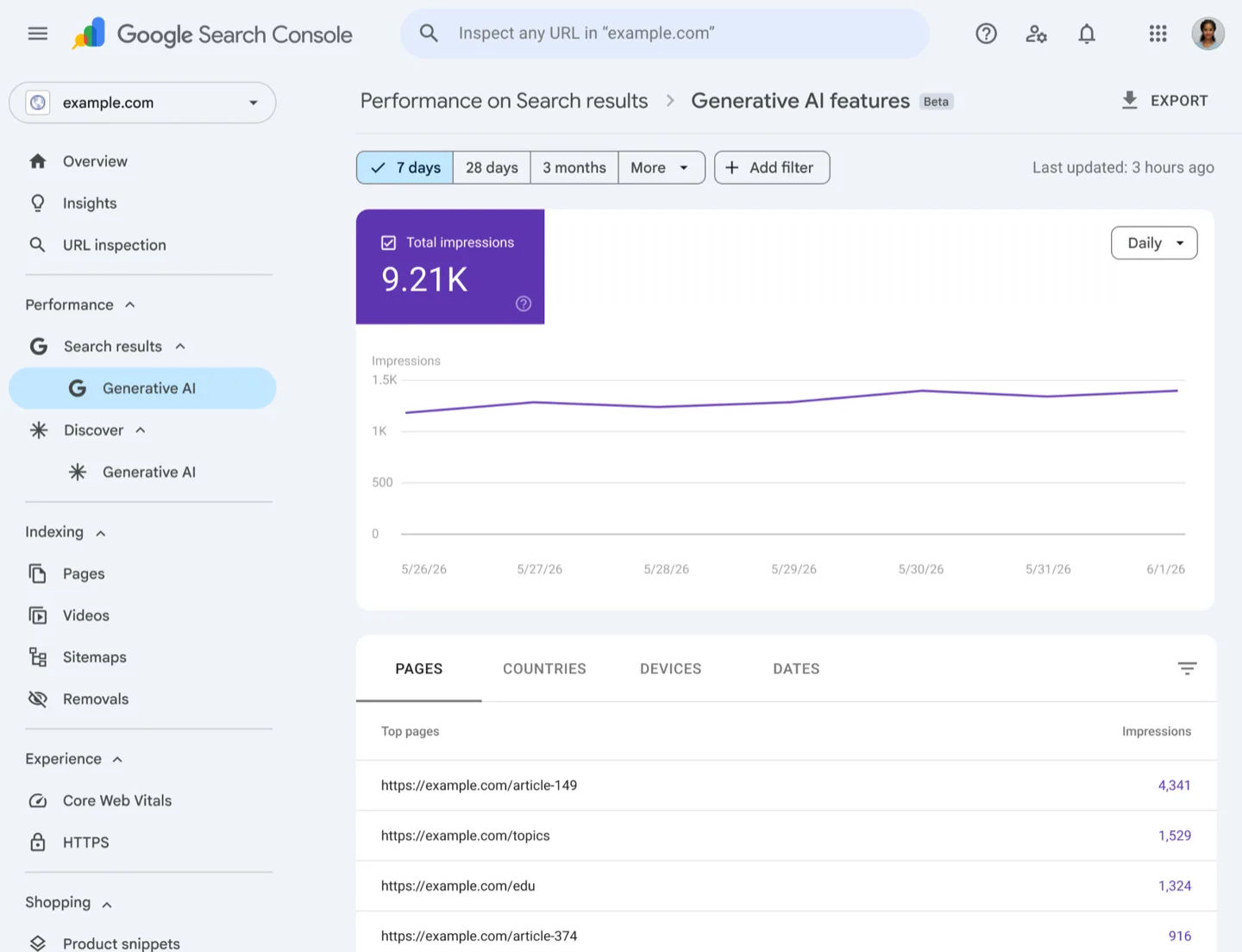
That’s the part I’m most excited about.
How I’m going to use this new report
I’m going to test running a hub-and-spoke play with it, and this article is an example.
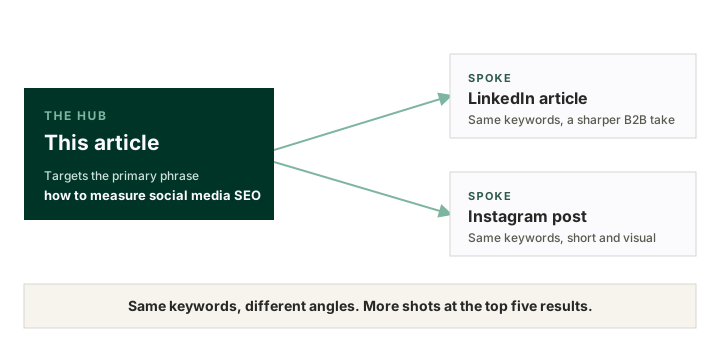
This long piece is the hub. It goes after the main phrase I want to own, in normal search and in AI search. Then I cut it down into derivatives: a shorter version as a LinkedIn article and LinkedIn post, and a shorter one again as an Instagram post. They go after the same keywords, just from different angles and in a different format.
The point of this multi-platform play is to get multiple sources to rank in AI search, boosting relevance and authority, as well as possibly gaining multiple slots from the top traditional search results. I’ve done something similar before, with parasite SEO, gaining 3 out of 5 top 5 results from Google.
This new Platform Properties is a great way to measure and track these kinds of plays.
Why this matters if you run marketing
If you’re a marketing manager, a head of marketing or a content lead, this one is worth your attention. Not because it’s a new dashboard, but because it gives you something to report.
You can now show how your work moves the company’s AI visibility, and AI visibility is what eventually turns into traffic, conversions and sales. That’s usually the hardest part of the job, proving the top of the funnel is doing anything at all.
Pairing this with your analytics, to see how that visibility becomes traffic and then conversions is a good practice, and once we get the AI visibility report in GSC also, we have a much richer story to tell.
What it tracks, and what it doesn’t
A few honest limits before you build on it.
It tracks Google Search and Discover. It doesn’t see the search inside each app, so TikTok search and YouTube search stay their own analytics.
It doesn’t include LinkedIn. For B2B that’s the one I actually want, so that one stings. Same goes for Reddit.
The data is sampled and gets revised, so treat it as directional, not as 100% data.
Treat it like share of voice for search. It’s a leading indicator of visibility, not traffic and not pipeline yet. Start measuring now, on the platforms your buyers actually use.
FAQ
Can you measure social media SEO?
Yes, now you can. Google Search Console added a property type called Platform Properties that shows how your YouTube, TikTok, Instagram and X content performs in Google Search and Discover. Before this you could do social media SEO, but tracking Google performance was hard.
Does social media help SEO?
More than it used to. Social content doesn't normally pass link authority the way a backlink does, but it ranks in Google directly, and it drives the brand mentions and branded searches that do influence rankings. It's also one of the stronger signals of whether you show up in AI answers.
Is Instagram good for SEO, and if yes how?
Yes. Instagram works as a search engine in its own right, and your posts and profile can rank in Google too. You help it along with a keyword-led profile and captions, keywords spoken and shown on screen in your Reels and by making sure Google indexing is switched on in your settings.
Is TikTok SEO a thing?
Yes, and it's one of the clearer cases. A lot of people, younger audiences especially, search on TikTok before they go near Google. Keyword-led captions, on-screen text and spoken keywords help you show up in TikTok search, and increasingly in Google too.
Does Google index Instagram and other social posts?
Increasingly, yes. Public content from e.g. YouTube, TikTok, Instagram and X can surface in Google Search and Discover. Platform Properties is the tool you can use to track that from Google.